
A Ball in A Box
An analogy for dealing with pain and injury in the training space.
Injury prevention is one of the most common hooks in the fitness industry and it is, for the most part, bullshit.
Humans are a wonderfully complex, and robust, dynamic system that has an almost limitless capacity to adapt to any stress placed upon it and yet the most common concern I get from new clients is the fear of injury in the gym.
Unfortunately the reality is that pain and injuries are a part of life. Every human, from the top-tier of elite athletes through to the completely sedentary person, will at some stage in their life experience pain or injury in a way that has an impact upon their ability to live their life to the fullest.
Being in pain sucks.
It doesn't matter whether that pain was the result of you pushing your physical limits or a random occurrence in your daily life, it will still be an unpleasant experience that I wouldn't wish on anyone. If, like me, you've spent many years training for and competing in sport you'll probably have developed a relationship to discomfort and pain that might seem a little odd to the uninitiated.
With enough exposure people will often develop a level of acceptance (and in some cases a masochistic sense of joy) in the discomfort associated with pushing your body to it's limits. It is understanding how to differentiate between the discomfort of physical exertion and the pain of injury that is an important skill but one that can only be learned through exposure to both ends of the spectrum.
For those that haven't been exposed to those environments the first time you get hurt in the training environment will likely be an incredibly confronting and often disheartening experience.
You'll ride the roller coaster of emotions from "I'll never be able to lift again and my body is ruined" through to "I got hurt because I did it wrong" or "I can't believe my coach picked such a dangerous exercise".
All of these feelings are perfectly valid and part of the journey. No coach should ever try to minimise or invalidate those experiences.
Pain is a protective mechanism our brains have developed over millennia to keep us safe and it makes sense that there would be a significant emotional response to an experience like an injury in training. Like the acceptance of discomfort and pain as part of the process, learning to seperate your emotional response from the practical approach to dealing with the issue is a lesson that is hard to teach without the personal experience.
One of my favourite analogies for dealing with pain/injury in training I first heard in the context of grief but works very well for the training space too. It's a great way to frame the issue and provide practical steps to getting you back to training hard as quickly as possible.
For this analogy imagine a box with a big, red “PAIN” button that's connected to your brain.
When pressed that button sends the pain signals associated with the injury and limits your ability to function either in the training space or just in life.
Now imagine we've place a ball inside that box that's inflated to the point where it fills the entire box while gently resting on the pain button. In this instance even the smallest movement of the box is going to cause that button to be pushed and you'll be in pain.

The goal of the recovery process is two-fold. First we're aiming to work to decrease the size of the ball (think of this as the direct symptoms associated with the injury itself) while also aiming to increase the size of the box (your capacity for training and life).
Let's look at one of the more common practical examples of this process - lower back pain. This is something that a lot of people have or will experience in their training journey and one that has a significant amount of societal baggage attached to it.
Before we go any further I want to preface this by saying that this discussion is a broad-brush strokes approach and should not be taken as specific advice for your individual circumstances.
Working with a knowledgeable physiotherapist or health professional is a key part of the injury recovery process. This discussion isn't a replacement for that process but instead a way of framing the journey to help you better understand where you are and where we're trying to move towards.
If you've ever tweaked your back in training or just in life you'll know just how debilitating that initial period immediately post injury can be.
Often those first few days are punctuated with near constant pain and a significant reduction in your ability to function in day-to-day activities.
It can be an eye-opening experience especially for those who've been blessed with a functional body up until that point. You'll likely feel helpless and struggle to imagine an existence beyond the immediate feelings of pain that dominate your existence.
In the initial day(s) immediately post injury you've got a small box with a fully inflated ball inside it.
Every movement you make is likely to slam that button down leaving you struggling to go about everyday life.
This is the bit that sucks the most.
The first port of call should be to reduce the size of the ball as quickly as we can to allow you to exist in your day-to-day life before we look to returning to training. Rest, adequate and high quality nutrition, and general stress management are all key strategies in reducing the size of the ball though the specifics are beyond the scope of this discussion.

Reducing the size of the ball helps create space within the box for movement that doesn't immediately set off the pain signals which is where we can start to return to day-to-day life in some form.
The goal is obviously to return to training as quickly as possible which means building the size of the box (i.e. your capacity for symptom-free movement) through a gradual reintroduction to the training program focussing first on movements that don't aggravate the existing issue directly. In the case of lower back issues that generally looks like upper body movements in a seated or lying position and, for some, machine-based lower body exercises.
As the ball continues to reduce in size we'll be able to gradually reintroduce more complex movements at lower loads building the box and moving toward a return to full training at pre-injury intensities. The speed of this process is individual to you, your circumstances, and your risk tolerance. If you're a high-level athlete aiming to be ready for a big competition we might approach this process a little more aggressively than we would for a general population client.
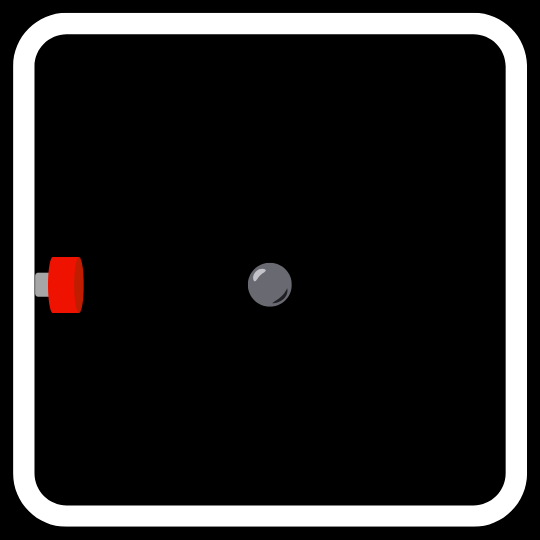
An important part of this process is that occasionally and for a variety of reasons, the ball will magically re-inflate and slam straight into that pain button.
Maybe you're in a stressful period of your work life or experiencing relationship stress and suddenly, in an otherwise normal training session, you tweak your back again.
It'll inevitably be a frustrating experience to feel like you've ruined all the positive progress but often we'll see that reducing the size of the ball gets a little easier the second time around especially as now you'll have had the experience of managing it and you should have a reasonable idea of how to reduce the size of the ball quickly and effectively.
Dealing with injuries and pain in training sucks but is, unfortunately, par for the course.
The box, the pain button and that stupid fucking ball will be forever a part of the journey but hopefully, by framing the process with this analogy we can help you see how we can return to hard training in a timely manner.
It might not be a short journey and it will almost certainly not be a linear one but you can do it.
One step at a time.
Just keep going.
If you’re stuck with a fully inflated ball and a tiny, stubborn box and you’re feeling lost I’d love to chat about how I can help you rebuild your training capacity and enjoy your time in the gym again.
Hit the link below to book a time to chat!
xoxo
Sherro